Meeting
Play Meeting
Meeting Screenshots






Meeting review
Dive into immersive choices, relationships, and steamy encounters in Meeting
Ever felt the thrill of a single choice sparking an unforgettable encounter? That’s Meeting in a nutshell—a captivating adult game where your words and decisions weave steamy, personalized stories. Developed by Karabinek in version 0.75, Meeting hooks you with dynamic dialogues, deep relationship building, and clever time management that mirrors real-life tension. I remember my first playthrough: a flirty joke unlocked a hidden path I replayed endlessly. Whether you’re chasing romance, intrigue, or intense moments, this guide unpacks everything to elevate your Meeting adventure. Get ready to shape your own erotic narrative!
How Meeting’s Gameplay Hooks You In
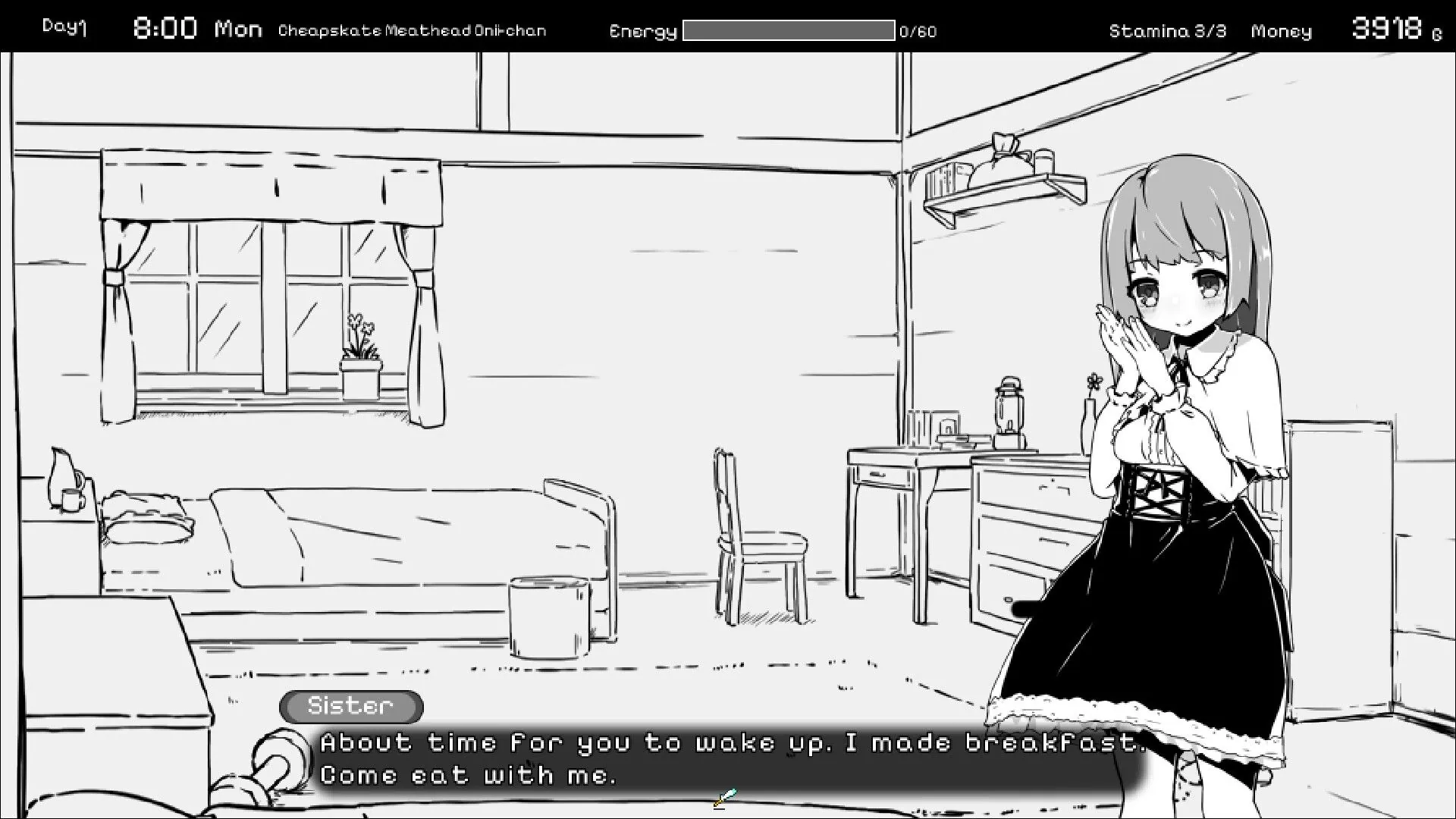
You know the feeling. It’s 2 a.m., you tell yourself “just one more day in the game,” and suddenly the sun is coming up. That was me with Meeting gameplay. I’d clicked on it out of curiosity, expecting a simple distraction, but instead found myself utterly absorbed in a world where every choice hummed with consequence. I wasn’t just clicking through a story; I was living one, sculpting my character’s life, career, and relationships with every decision. That’s the secret sauce—the incredible player agency that turns minutes into hours. Meeting doesn’t just entertain you; it makes you an active architect of your own digital destiny. 🕐✨
This Meeting game masterfully blends life simulation with deep narrative, creating a loop that’s incredibly hard to break. You’re not a passive observer. You are the protagonist, navigating work challenges, social dramas, and personal ambitions. The magic lies in how all these systems—dialogue, time, affinity—interlock, creating a living world that reacts to your unique playstyle. Let’s dive into what makes this experience so uniquely sticky.
What Makes Meeting Gameplay So Addictive? 🎮
At its heart, the addictive quality of Meeting gameplay comes from a powerful feedback loop of choice and consequence. Unlike linear stories, Meeting presents a web of possibilities. Early on, I casually chose to help a colleague with a project instead of going out for drinks. This simple time management Meeting decision didn’t just boost my work skill; it unlocked a completely new subplot weeks later, where that colleague became a crucial ally. The game remembers everything.
The core Meeting game mechanics are built on three pillars: a dynamic dialogue system, a nuanced affinity system, and a strategic time/energy resource layer. They don’t operate in isolation. Flirting with someone at a party (dialogue) boosts their Attraction meter (affinity), but costs Social energy, which you might have needed for a networking event the next day (time management). This interconnectedness means there’s no single “right” way to how to play Meeting game. My chaotic, charm-focused playthrough was wildly different from my friend’s careful, career-driven path. This creates phenomenal replayability, as you’ll want to go back to see how different dialogue choices in Meeting and schedule decisions branch the story in new directions.
The beauty of Meeting is that your “mistakes” aren’t failures; they’re just alternative story paths you haven’t explored yet.
Mastering Dialogue Choices in Meeting 💬
This is where Meeting truly shines. Forget simple “Good/Evil” or “Yes/No” options. The dialogue choices in Meeting are tone-based, requiring you to read the room and your relationship with the character. You might have options to Flirt, Joke, Sympathize, Challenge, or Be Direct. During one late-night session, I was trying to comfort a friend. A blunt “Direct” option felt too cold, but a playful “Joke” seemed insensitive. I chose “Sympathize,” and it deepened our bond significantly, opening up a vulnerable, heartfelt scene I would have otherwise missed.
These choices directly feed the brilliant Meeting affinity system. Think of it not as one bar to fill, but a relationship matrix tracking multiple dimensions like Trust, Respect, and Attraction. Different characters value different things. A no-nonsense boss might respond better to choices that build Respect and Professional Trust, while a potential romantic interest might need a mix of playful Attraction and genuine Trust. Watching these invisible meters shift based on your conversational choices is incredibly rewarding and makes every interaction feel meaningful.
| Feature | Generic Games | Meeting |
|---|---|---|
| Story Depth | Linear or shallow branching | Complex, interwoven narrative webs with long-term consequences |
| Player Agency | Illusion of choice, limited impact | Meaningful **dialogue choices in Meeting** that tangibly shape story, relationships, and endings |
| Relationship System | Simple “like” meter | Multi-faceted **Meeting affinity system** (Trust, Respect, Attraction, etc.) |
| Replay Value | Low, same core experience | Extremely High, radically different paths based on **Meeting gameplay** style |
| Immersion | Passive viewing | Active role-playing through integrated **time management Meeting** and life-sim mechanics |
Balancing Time and Resources Like a Pro ⏳⚖️
Your most precious commodities in Meeting aren’t gold or points—they’re Time and Energy. Each day, you have a limited number of action points to spend on Work, Social, Personal, and Romance activities. This time management Meeting layer is what turns a great story into a compelling strategy game. Do you burn midnight oil on a work project to get a promotion, or attend a party to nurture a budding relationship? You can’t do it all, and that’s the point.
This is the crux of how to play Meeting game strategically. Your choices here build skills (like Creativity or Persuasion), progress your career, trigger special events, and determine who you have time to connect with. Letting your Energy dip too low can lead to burnout, causing penalties. I learned this the hard way when my character, exhausted from back-to-back social events, bombed a crucial work presentation. It was a brutal but brilliant lesson in balance.
Here are 5 pro tips for mastering this balance:
- Plan Your Week, Not Just Your Day: Look at the calendar for upcoming special events or deadlines. Block out time for mandatory work projects first, then fill in social activities.
- Energy is a Resource, Not a Limit: Low-energy activities like reading a book at home can restore Energy while also boosting skills. Use them as strategic buffers.
- Sync Your Actions: If you need to build a relationship and a skill, choose a social activity that does both, like going to an art gallery with a creative friend.
- Don’t Neglect “Alone Time”: Personal actions are vital for skill growth and introspection, often unlocking inner monologues and character development crucial for key story moments.
- Embrace Imperfection: You will miss some events. That’s okay! It makes your playthrough unique. The FOMO is real, but it feeds the desire to replay.
Mastering the dance between meaningful conversation and smart scheduling is what transforms you from a passive player into the true author of your Meeting story. It’s where the Meeting game mechanics click, and you stop just playing a game—you start living a different life, one compelling choice at a time. 🌟
Meeting isn’t just a game—it’s your canvas for crafting steamy, choice-driven tales that feel profoundly personal. From mastering dialogue wheels and affinity systems to uncovering hidden paths through smart customization, every playthrough reveals new depths in relationships and encounters. My own journeys through its branching narratives left me hooked, replaying for those perfect moments. Ready to dive in? Grab version 0.75, experiment with bold choices, and share your wildest stories in the comments. Your next unforgettable adventure awaits—start playing Meeting today!